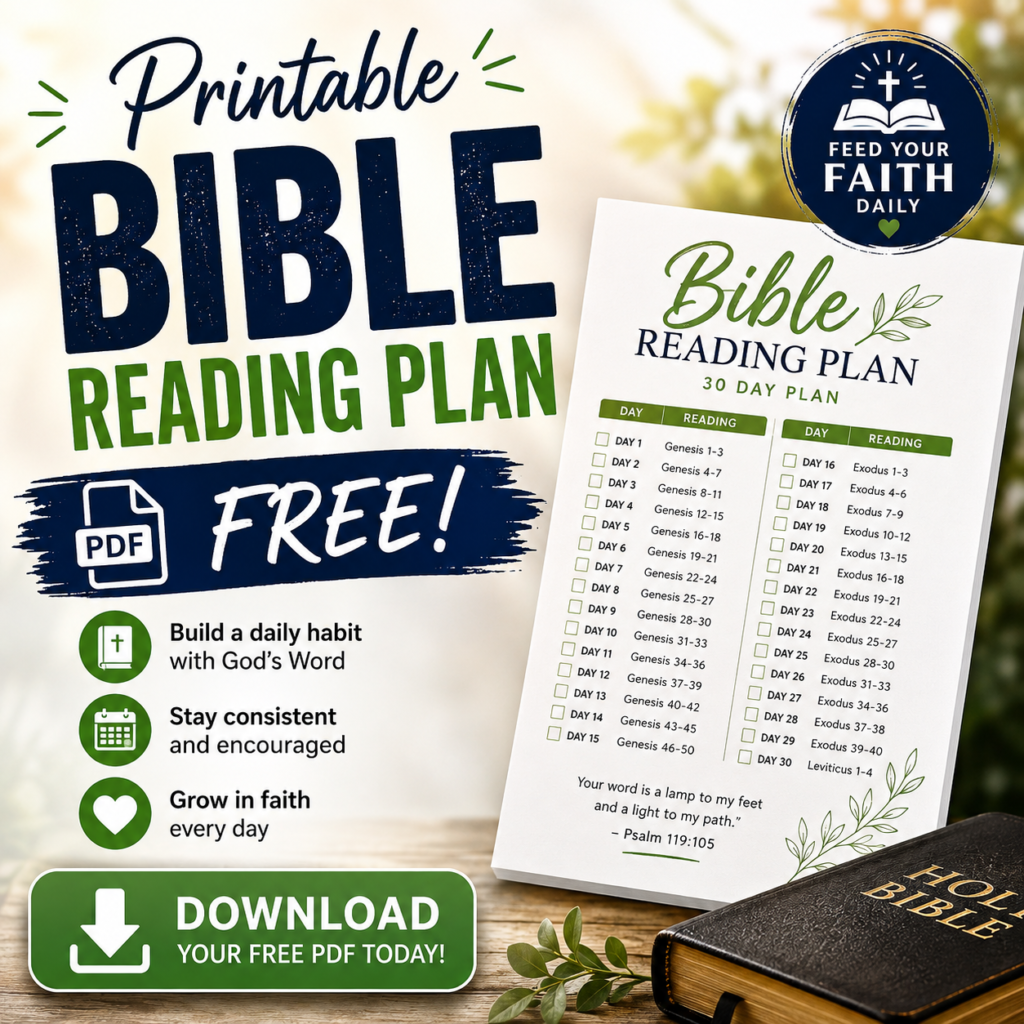
If you’ve ever downloaded a Bible reading plan, printed it out, filled in the first three days, and then let it sit in a drawer — you’re not alone. A printable plan can be one of the simplest tools for building consistency in your faith life, but only if you use it the right way. The paper itself doesn’t create the habit. How you set it up, where you keep it, and how you respond when you miss a day all matter more than the plan itself.
This guide walks through practical, tested strategies for getting real value out of a printable Bible reading plan — whether you’re using a free download, a printable from a shop like Etsy, or one you made yourself.
Why Printable Plans Still Work in a Digital World
It would be easy to assume that apps have made printable reading plans obsolete. In practice, the opposite has held true for a lot of readers. A printed page doesn’t send notifications, doesn’t compete with texts and social media, and doesn’t get lost in a phone’s home screen shuffle. Checking off a physical box also triggers a small, tangible sense of completion that a digital checkmark doesn’t always replicate.
Printable plans also give you something an app can’t: a paper trail. Six months from now, a stack of completed sheets is visible proof of consistency in a way that an app’s streak counter isn’t.
1. Choose a Plan Based on Your Season, Not Your Ambition
The most common reason printable reading plans fail isn’t laziness — it’s mismatch. A plan built for reading through the entire Bible in a year assumes a fairly consistent 15-20 minutes a day, every day. If you’re in a season with a newborn, a demanding work project, or a health issue, that plan is set up to fail before you start.
Instead, match the plan to your actual capacity right now:
- New to consistent reading: a single-book plan (just Philippians, or just Psalms) or a 30-day topical plan
- Steady but busy: a chronological or thematic plan with short daily readings (one chapter or less)
- Ready for depth: a full read-through-the-Bible plan, ideally with built-in margin for catch-up days
2. Build in Catch-Up Days From the Start
Plans that assume perfect daily execution set an unrealistic bar. Look for (or build) a plan that includes a buffer day once a week — often Sunday — with no new reading assigned. That day exists specifically to catch up on anything missed, which means missing one day during the week doesn’t compound into missing the whole plan.
3. Keep the Plan Somewhere You’ll Actually See It
A printable plan tucked inside the back cover of a Bible that stays on a shelf won’t get used. The plans that get finished are usually kept somewhere in the daily line of sight — taped inside a planner, clipped to a kitchen bulletin board, or kept on a nightstand next to a reading lamp. The goal is for the plan to interrupt your day, not wait patiently to be remembered.
4. Use a Physical Marking System, Not Just Mental Tracking
Checking a box, coloring in a square, or using a highlighter does more than record progress — it creates a small reward loop. Many printable plans include a grid or checklist specifically for this reason. If yours doesn’t, add one yourself; a simple 30- or 365-day grid drawn in the margin works fine.
5. Pair the Plan With a Fixed Time of Day
A plan without a set time becomes a plan you’ll “get to eventually.” Attaching the reading to an existing habit — coffee in the morning, right after brushing teeth, or during a lunch break — removes the decision-making step that often causes people to skip.
6. Print in a Format You’ll Actually Use
Full-page printables work well for a designated devotional spot at home. For anyone who travels or reads on the go, a smaller card-sized or half-page version that fits in a purse, backpack, or Bible cover removes the excuse of “I forgot it at home.”
7. Leave Room for Notes, Not Just Checkboxes
A plan that only tracks whether you read, and not what you noticed, tends to feel repetitive after a few weeks. Look for printables with a small notes line or a “one takeaway” prompt next to each day. Even a single sentence changes the exercise from a checklist into reflection.
8. Don’t Restart From Day One After a Missed Week
One of the most common reasons people abandon a plan entirely is guilt over falling behind — followed by the assumption that the only fix is starting completely over. It isn’t. Pick back up on the current date, or the current chapter, and treat the skipped days as skipped, not as disqualifying.
9. Use Color-Coding for Different Types of Content
For plans that mix Old Testament, New Testament, Psalms, and Proverbs readings in the same day (a common structure in chronological and “Bible in a year” plans), color-coding each category with a highlighter makes it easier to see at a glance which type of reading is left for the day, especially for shorter sessions.
10. Combine the Plan With a Short Prayer Prompt
Reading without any response tends to feel more like information intake than spiritual practice. Many printable plans leave a small blank space at the bottom of each day specifically for this — even one line, like “what I’m asking God for today,” turns the reading into a two-part habit instead of a single task.
11. Print a Few Weeks at a Time Instead of the Whole Year
Printing all 365 days at once can be motivating on day one and overwhelming by week three — a full year’s stack is a visual reminder of how much is left, which can work against momentum. Printing in monthly or quarterly batches keeps the stack manageable and gives a natural point to reassess whether the plan still fits your season.
12. Track Streaks Loosely, Not Rigidly
A visible streak can be motivating, but for some readers it becomes a source of pressure that makes one missed day feel like total failure. If a strict streak counter is discouraging rather than motivating, switch to a monthly completion percentage instead (for example, tracking “22 of 30 days” rather than “day 1” after a miss).
13. Keep a Backup Copy
A printable plan is easy to lose in a move, a bag switch, or a spill. Keeping a saved digital copy (in a phone’s photos or a cloud folder) means a lost paper copy is a minor inconvenience instead of the end of the habit.
14. Share the Plan With an Accountability Partner
Reading plans finished in isolation are more likely to be abandoned quietly than ones shared with someone else. Even a simple weekly check-in text — “How’s the plan going?” — adds a layer of accountability a solo habit doesn’t have.
15. Choose Plans With a Clear Visual Design
This sounds cosmetic, but it isn’t. A printable that’s visually cluttered, hard to scan, or crammed with tiny text is harder to use daily than one with clear typography, enough white space, and a simple checkbox system. If a plan feels like a chore to look at, it becomes a chore to use.
Quick Reference: Matching a Plan to Your Situation
| Situation | Best Plan Type | Format Tip |
|---|---|---|
| Brand new to daily reading | Single-book or 30-day topical plan | Full-page, one reading per day |
| Busy schedule, want consistency | Chronological plan with built-in catch-up days | Half-page or card-sized for portability |
| Want deeper study, not just reading | Full Bible read-through with notes section | Printed in quarterly batches |
| Easily discouraged by missed days | Any plan with a percentage tracker instead of a streak | Monthly grid, color-coded categories |
| Reads mostly at home | Full-page plan for a fixed spot (desk, nightstand) | Laminated or in a binder sleeve |
| Reads on the go | Card-sized or bookmark-style plan | Kept in a Bible cover or bag |
FAQ
How long should a daily Bible reading take? Most printable plans are built around 10-20 minutes a day, which is enough for a chapter or two depending on the book. Plans can be shortened by choosing single-chapter daily readings rather than multi-chapter assignments.
What if I miss several days in a row? Pick up on the current day of the plan rather than the day you left off on. Treating a plan as calendar-based rather than sequence-based prevents a short gap from turning into an abandoned plan.
Are printable plans better than Bible apps? Neither is universally better — it depends on what keeps a person consistent. Printables tend to work well for people who are distracted by notifications or who respond well to physical tracking; apps work well for people who want built-in audio, search, or multiple translations in one place. Many people use both together.
Should I follow a plan chronologically or by book order? Chronological plans (organized by when events occurred) tend to help with historical context, while book-order plans follow the Bible’s traditional structure. Neither is more “correct” — the better choice usually comes down to whether historical sequencing or familiar structure helps a reader stay engaged.
Can a printable plan work for a family or group? Yes, and it often increases follow-through. A shared printable posted somewhere visible (a kitchen counter or family bulletin board) with each person’s initials next to completed days adds a light layer of shared accountability.
Final Thoughts
A printable Bible reading plan is a tool, not a guarantee — the paper doesn’t build the habit by itself. The strategies that actually make a difference are small and structural: matching the plan to your current season, keeping it visible, building in room to miss a day without quitting, and pairing the reading with a simple response like a note or a prayer line. None of that requires a complicated system. It just requires a plan that’s realistic enough to still be in use a year from now, not just week one.