Feeling overwhelmed, undervalued, or dreading another Monday morning? You’re not alone — and God has something to say about it.
Work anxiety affects millions of people every single day. Whether it’s the pressure of a demanding boss, fear of failure, impossible deadlines, workplace conflict, or the nagging worry that you’re simply not enough, stress at work can seep into every corner of your life. It can steal your sleep, damage your relationships, and make you feel trapped.
But here’s what the Bible makes absolutely clear: God sees you in your workplace. He has not left you to navigate the stress alone. From Genesis to Revelation, Scripture is full of wisdom, comfort, and practical truth for people who are struggling — including people who are struggling at work.
This article gives you 25 Bible verses for work anxiety, organized by the specific kind of anxiety you’re facing, along with honest, practical guidance on how to apply each one. We’ve also included a Frequently Asked Questions section and a simple prayer you can use today.
Why Work Anxiety Is So Common (and Why God Cares)
Most of us spend one-third of our lives at work. That’s not a small slice of life — it’s the majority of our waking hours. So when work becomes a source of chronic anxiety, it touches everything: your mood, your health, your family, your sense of identity, and your relationship with God.
The Bible never promises that work will be easy. In fact, after the Fall in Genesis 3, God explicitly told Adam that the ground would produce “thorns and thistles” — that labor would come with frustration and difficulty. Work has been hard since the beginning.
But the same God who acknowledged the difficulty of work also walked through it with people. Moses led a nation of complainers for forty years. David worked as a shepherd boy in obscurity before becoming king. Daniel navigated a hostile, pressure-filled workplace in a foreign empire. Paul worked as a tentmaker while planting churches and facing constant opposition.
Scripture is not silent about workplace struggles. It speaks to them directly.
And more importantly: God is not distant from your cubicle, your classroom, your construction site, or your hospital ward. He is present, and His Word has specific, powerful truth for what you’re facing right now.

Bible Verses for Fear and Overwhelm at Work
When the workload feels impossible and anxiety is high, these verses speak directly to the fear and overwhelm that can paralyze us.
1. Philippians 4:6-7 (NIV)
“Do not be anxious about anything, but in every situation, by prayer and petition, with thanksgiving, present your requests to God. And the peace of God, which transcends all understanding, will guard your hearts and your minds in Christ Jesus.”
This is perhaps the most well-known verse about anxiety in the entire Bible — and for good reason. Paul wrote these words from prison, under house arrest, facing a death sentence. He wasn’t writing from a comfortable office. He wrote from a place of genuine danger. And his instruction is: pray instead of panic.
How to apply it: The next time a work situation triggers anxiety, stop before you spiral. Take sixty seconds, name the specific fear out loud to God, and ask Him for His peace. Then give thanks for one thing — anything. The act of gratitude physically interrupts the anxiety response.

2. Isaiah 41:10 (ESV)
“Fear not, for I am with you; be not dismayed, for I am your God; I will strengthen you, I will help you, I will uphold you with my righteous right hand.”
Notice the three promises packed into this verse: strength, help, and being upheld. God doesn’t just say “don’t be afraid” without offering something in return. He says I will — active, present-tense engagement on your behalf.
How to apply it: Write this verse on a sticky note and put it somewhere visible at your workspace. Read it aloud in the morning before you start work. Let the “I will” statements sink in as personal promises to you.
3. Matthew 11:28-30 (NIV)
“Come to me, all you who are weary and burdened, and I will give you rest. Take my yoke upon you and learn from me, for I am gentle and humble in heart, and you will find rest for your souls. For my yoke is easy and my burden is light.”
Jesus said this to people who were exhausted by religious obligation, but it applies to every form of heavy burden — including the crushing weight of workplace expectations. The invitation is personal and direct: Come to me.
How to apply it: Spend five minutes in the morning “bringing” your workday to Jesus before it begins. Hand Him the meetings, the deadlines, the difficult conversations. Consciously choose to carry them alongside Him rather than alone.

4. Psalm 46:1-2 (NIV)
“God is our refuge and strength, an ever-present help in trouble. Therefore we will not fear, though the earth give way and the mountains fall into the heart of the sea.”
“Though the earth give way” — this is biblical language for absolute worst-case scenarios. Even if everything collapses, God remains a refuge. The things we fear most at work — getting fired, failing publicly, being humiliated — are not beyond God’s ability to sustain us through.
How to apply it: When your worst-case thinking kicks in, counter it with this verse. Ask yourself: If the worst happened, would God still be my refuge? The answer is always yes.
5. Joshua 1:9 (NIV)
“Have I not commanded you? Be strong and courageous. Do not be afraid; do not be discouraged, for the Lord your God will be with you wherever you go.”
God said these words to Joshua the moment he had to step into an almost impossible assignment — leading millions of people into a land full of obstacles. God’s response was not “it’ll be easy” but rather “I will be with you wherever you go.”
How to apply it: Before a high-stakes presentation, difficult meeting, or anxiety-inducing day, read this verse and remind yourself: God is not only in your church, your home, or your quiet time. He is with you wherever you go — including that boardroom, that classroom, that break room.

Bible Verses for Conflict and Difficult People at Work
Workplace relationships are one of the biggest sources of work anxiety. A toxic boss, a passive-aggressive coworker, or a hostile team environment can drain you to the core. Here is what God’s Word says.
6. Romans 12:18 (NIV)
“If it is possible, as far as it depends on you, live at peace with everyone.”
Notice the qualification: as far as it depends on you. God is realistic. He doesn’t demand that you manufacture peace with people who refuse to receive it. He calls you to do your part — and then leave the rest with Him.
How to apply it: Ask yourself, “Have I done everything that is within my power to make peace here?” If yes, release the outcome. If no, identify one small step you can take today.
7. Proverbs 15:1 (NIV)
“A gentle answer turns away wrath, but a harsh word stirs up anger.”
This Proverb has practical, observable consequences in every workplace. How you respond to a difficult person either escalates or de-escalates the situation. Gentleness is not weakness — it is strategic and Christlike.
How to apply it: Before responding to a difficult email or entering a tense meeting, pause and ask God to give you a gentle spirit. Read this verse first. Then respond.
8. Romans 8:31 (NIV)
“What, then, shall we say in response to these things? If God is for us, who can be against us?”
When it feels like a coworker is out to get you, or a supervisor is undermining you, or office politics are working against you — this verse is a stabilizing anchor. Human opposition cannot derail what God has authorized for your life.
How to apply it: When you feel targeted or opposed at work, write down: God is for me. List three ways you’ve seen His hand in your work life. Let gratitude and perspective dilute the power of fear.
9. Matthew 5:44 (NIV)
“But I tell you, love your enemies and pray for those who persecute you.”
This is one of the most challenging commands in all of Scripture — and one of the most transformative. Praying for a difficult coworker doesn’t excuse their behavior. But it changes you. It makes room for compassion, and it puts the situation into God’s hands.
How to apply it: Write the name of one difficult person at your workplace. Pray for them by name every day for one week. Ask God to show you what He sees when He looks at them.
10. Exodus 14:14 (ESV)
“The Lord will fight for you, and you have only to be still.”
Sometimes the most powerful thing you can do in a workplace conflict is resist the urge to defend yourself, retaliate, or constantly maneuver. There is a time to speak — and a time to be still and let God work.
How to apply it: In situations where you feel an urgent need to defend yourself, ask God first: Is this a moment to speak or a moment to be still? Trust that He is working even when you cannot see it.

Bible Verses When You Feel Like a Failure at Work
Self-doubt and feelings of failure are some of the deepest forms of work anxiety. If you’ve made a mistake, missed a deadline, received harsh feedback, or simply feel like you’re not good enough — these verses are for you.
11. Lamentations 3:22-23 (NIV)
“Because of the Lord’s great love we are not consumed, for his compassions never fail. They are new every morning; great is your faithfulness.”
Every single morning is a fresh start. Not because you’ve earned it, but because of God’s character — His faithfulness and compassion are renewed daily, independent of your performance.
How to apply it: On the mornings after a hard day or a significant failure at work, read this verse first. Before you check your email. Before you replay what went wrong. Let the newness of God’s mercies be the first thing you take in.
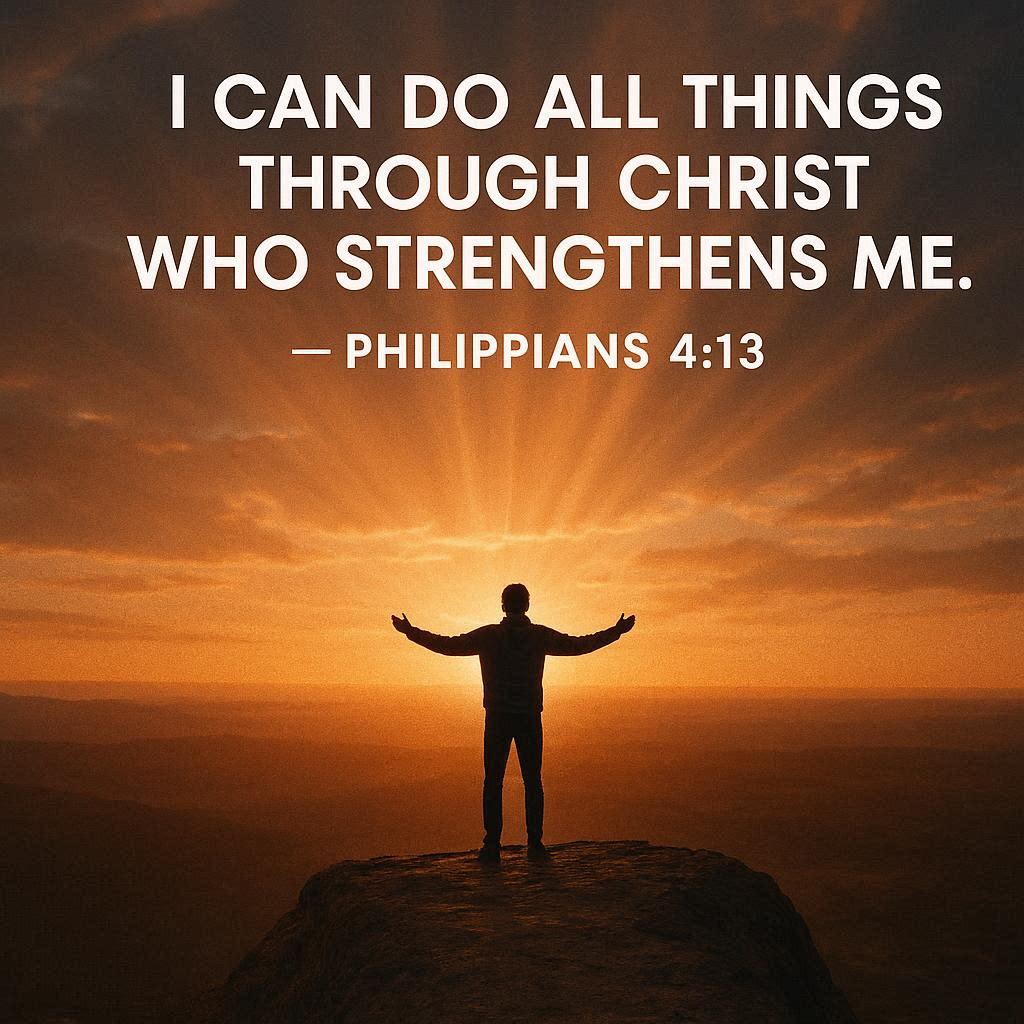
12. Philippians 4:13 (NIV)
“I can do all this through him who gives me strength.”
Often pulled out of context, this verse isn’t a claim that God will make you capable of anything you set your mind to. It’s Paul saying that through Christ, he had learned the secret of contentment in both abundance and need — he could endure all things. The same strength is available to you in the difficult seasons of work.
How to apply it: When facing a task that feels beyond you, pray specifically: God, I cannot do this in my own strength. I need yours. Then take the next step, trusting He will provide what you need.
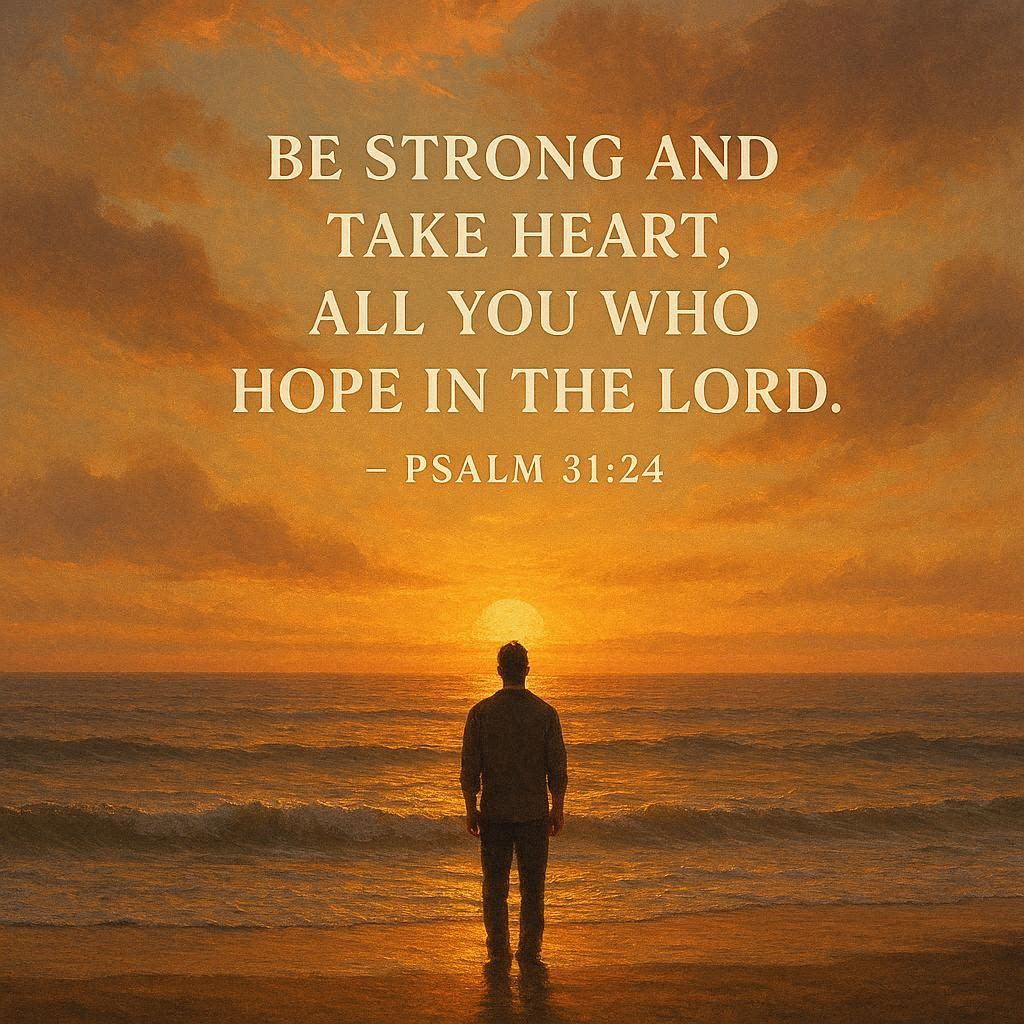
13. 2 Corinthians 12:9 (NIV)
“But he said to me, ‘My grace is sufficient for you, for my power is made perfect in weakness.’ Therefore I will boast all the more gladly about my weaknesses, so that Christ’s power may rest on me.”
God does some of His best work through people who are acutely aware of their own limitations. The places where you feel most inadequate at work may be the very places where His power is most visible.
How to apply it: Instead of hiding your struggles, consider being honestly vulnerable with a trusted colleague or mentor. Authenticity invites connection, and weakness surrendered to God becomes strength.
14. Psalm 37:23-24 (NIV)
“The Lord makes firm the steps of the one who delights in him; though he may stumble, he will not fall, for the Lord upholds him with his hand.”
Notice: the person in this verse stumbles. Stumbling is not failure. It’s part of the journey. And God’s response to stumbling is not condemnation — it’s upholding. He holds your hand even when you fall.
How to apply it: When you make a mistake at work, separate the event from your identity. You made a mistake; you are not a mistake. Acknowledge what happened, make it right where possible, and receive God’s grace.
Bible Verses for Burnout and Exhaustion at Work
Burnout is more than being tired. It’s a state of emotional, physical, and spiritual depletion that develops when stress is chronic and rest is absent. If you’re there, these verses speak to your condition.
15. Matthew 11:28 (NIV)
“Come to me, all you who are weary and burdened, and I will give you rest.”
The word “weary” here in the original Greek is kopiaō — it means to be utterly spent, to labor to the point of exhaustion. Jesus is not speaking to people who are slightly tired. He is speaking to people who have nothing left. And His promise is rest.
How to apply it: Rest is not laziness — it is obedience. If you are burned out, give yourself permission to rest. Protect your Sabbath. Sleep. Disconnect. God built rest into the rhythm of creation because He knows you need it.
16. Psalm 23:1-3 (NIV)
“The Lord is my shepherd, I lack nothing. He makes me lie down in green pastures, he leads me beside quiet waters, he refreshes my soul.”
Notice the word refreshes. The Hebrew is shûb — to restore, to return something to its original condition. God is not merely in the business of keeping you barely functional. He restores. He returns you to wholeness.
How to apply it: Identify what “green pastures” and “quiet waters” look like for you. For some it’s a walk in nature. For others it’s an hour of silence, a creative hobby, or deep time in prayer. Pursue those things intentionally, not as luxuries, but as acts of spiritual obedience.
17. Galatians 6:9 (NIV)
“Let us not become weary in doing good, for at the proper time we will reap a harvest if we do not give up.”
Burnout often comes when we are doing good work but cannot see the fruit of it. Paul’s encouragement is to hold on — a harvest is coming. Your faithfulness in the invisible, unrecognized seasons matters more than you know.
How to apply it: Write down three ways your work has made a positive difference, even small ones. Reconnect with the “why” behind what you do. Ask God to renew your sense of purpose.
Bible Verses for Uncertainty and Job Fear
Few things generate anxiety like not knowing — not knowing if your job is secure, not knowing if you should quit, not knowing what comes next.
18. Jeremiah 29:11 (NIV)
“‘For I know the plans I have for you,’ declares the Lord, ‘plans to prosper you and not to harm you, plans to give you hope and a future.'”
God spoke these words to people who had lost everything — their city, their temple, their way of life. They were living in exile, in a foreign country, surrounded by uncertainty. And God said: I know the plans I have for you. Not the plans you can see. His plans.
How to apply it: When work feels uncertain, remind yourself that God’s plans for you are not dependent on your current employer, your current title, or your current circumstances. His plans are bigger than your job.
19. Proverbs 3:5-6 (NIV)
“Trust in the Lord with all your heart and lean not on your own understanding; in all your ways submit to him, and he will make your paths straight.”
Anxiety thrives in the gap between what we know and what we need to know. Proverbs 3 acknowledges that our own understanding is limited — and invites us to trust Someone whose understanding is not.
How to apply it: Make a list of the specific things about your work situation that feel out of your control. For each one, write a one-sentence prayer surrendering it to God. Repeat as needed.

20. Isaiah 43:2 (NIV)
“When you pass through the waters, I will be with you; and when you pass through the rivers, they will not sweep over you. When you walk through the fire, you will not be burned; the flames will not set you ablaze.”
The verse does not say if you pass through waters and fire. It says when. God promises not to remove every hard season, but to be present and to preserve you through it.
How to apply it: In the middle of a difficult work season, ask God what He might be doing in you through it. Character, compassion, and dependence on God are often forged in the hardest seasons.
Bible Verses for Feeling Overlooked or Undervalued at Work
Being passed over for a promotion, not receiving recognition for your work, or feeling invisible in your workplace is deeply painful. Here is what God says.
21. Colossians 3:23-24 (NIV)
“Whatever you do, work at it with all your heart, as working for the Lord, not for human masters, since you know that you will receive an inheritance from the Lord as your reward. It is the Lord Christ you are serving.”
This verse completely reframes the audience of your work. You are not ultimately working for your boss, your company, or your performance review. You are working for the Lord — and He sees everything your supervisor misses.
How to apply it: When you feel undervalued, remind yourself: God sees this work. He is the one I’m ultimately serving. Let that truth motivate your excellence even when no one is watching.

22. Psalm 139:1-3 (NIV)
“You have searched me, Lord, and you know me. You know when I sit and when I rise; you perceive my thoughts from afar. You discern my going out and my lying down; you are familiar with all my ways.”
God is not missing what is happening to you at work. He knows every meeting, every late night, every moment you stayed late and no one noticed. You are fully known.
How to apply it: Sit with this psalm slowly. Read it aloud with your name substituted in. Let the knowledge of being fully seen by God be more significant than being unseen by people.
23. 1 Samuel 16:7 (NIV)
“But the Lord said to Samuel, ‘Do not consider his appearance or his height, for I have rejected him. The Lord does not look at the things people look at. People look at the outward appearance, but the Lord looks at the heart.'”
God chose David — the overlooked youngest son, left in the field — over all his impressive older brothers. The criteria the world uses to evaluate you are not the criteria God uses.
How to apply it: When you feel passed over, ask God: What do you see in me that others don’t? Then ask Him to develop those qualities further, regardless of whether anyone notices.
24. Proverbs 12:25 (ESV)
“Anxiety in a man’s heart weighs him down, but a good word makes him glad.”
The weight of anxiety is real and physical. But so is the power of encouragement. If your workplace lacks encouraging words, become the person who offers them. You may break a cycle that has been slowly suffocating everyone.
How to apply it: Commit to one genuine, specific encouragement per day at work. Watch what it does — both to others and to your own spirit.
25. Psalm 118:5-6 (ESV)
“Out of my distress I called on the Lord; the Lord answered me and set me free. The Lord is on my side; I will not fear. What can man do to me?”
“What can man do to me?” is one of the most liberating questions in Scripture. When your anxiety is rooted in what others think of you, or what your employer might do, this verse recalibrates your fear. Human authority operates within the permission of a sovereign God.
How to apply it: When fear of what people might do is driving your anxiety, write this question down: What can man ultimately do to me? Then list what God has promised that no human can take away: your identity, your salvation, your purpose, His love.
How to Actually Use Bible Verses When You’re Anxious at Work
Reading verses is a good start. But here are six practical strategies to help Scripture move from the page into your lived experience.
Start the Day With God Before Work Begins
Before you check email, read the news, or scroll through your phone, spend five to fifteen minutes with God. Read one verse slowly. Pray about what’s ahead. This doesn’t need to be a long, formal devotional — it just needs to be first. Beginning your day connected to God anchors everything that follows.
Write Verses Where You’ll See Them
Put a verse on a sticky note on your monitor. Save it as your phone wallpaper. Write it on an index card and tuck it in your wallet. The goal is repetition — letting Scripture interrupt your anxious thoughts throughout the day.
Use the STOP-PRAY-BREATHE Method
When anxiety spikes at work: Stop what you’re doing for sixty seconds. Pray — even a single sentence: “God, I’m anxious. I need Your peace.” Breathe slowly while recalling a verse. This pattern interrupts the physiological anxiety spiral and reconnects you to truth.
Pray Specifically, Not Generally
Philippians 4:6 says to make your requests known — specific requests. “God, calm my anxiety” is a prayer. But “God, I’m terrified of the performance review at 2 p.m. today. Please give me clarity, peace, and the right words” is a more specific, engaged prayer. Specific prayers invite specific awareness of answered prayer.
Find a Colleague Who Prays
If there is another believer in your workplace, find a way to connect regularly — even a five-minute prayer over text or a quick lunch check-in. Ecclesiastes 4:12 says a cord of three strands is not quickly broken. Community is part of how God sustains us.
Take Your Rest Seriously
No amount of Bible verses will fully counteract chronic sleep deprivation, poor nutrition, and zero margin in your schedule. God designed your body to need rest. Protect your Sabbath. Protect your sleep. Rest is not the absence of discipline — it is a spiritual discipline.
A Simple Prayer for Work Anxiety
If you’re not sure where to start, pray this:
Lord, I bring my work anxiety to You today. You see every pressure I’m under — the deadlines, the conflicts, the uncertainty, and the fear. I cannot manage this alone.
Fill me with the peace that surpasses understanding. Help me to work with excellence as if I’m working for You. Guard my mind from spiraling fear. Give me wisdom for each decision, grace for the difficult people, and rest for my weary soul.
Remind me that my identity does not come from my performance. Remind me that You hold my future. Remind me that You are with me — today, in this workplace, in this moment.
I trust You. Amen.

Frequently Asked Questions
What does the Bible say about anxiety at work?
The Bible addresses anxiety throughout both the Old and New Testaments. Philippians 4:6-7 instructs believers not to be anxious about anything but to bring every concern to God in prayer. Matthew 11:28 offers a direct invitation from Jesus to bring your burdens to Him. Isaiah 41:10 promises God’s strength, help, and upholding presence. The consistent biblical message is that work-related anxiety is real, God sees it, and He offers both His presence and His peace as resources for navigating it.
Is it a sin to feel anxious at work?
No. Anxiety is a human emotion, not a moral failure. The Bible acknowledges human fear and anxiety throughout — the Psalms are filled with expressions of distress, worry, and desperation. What the Bible cautions against is remaining in anxiety without turning to God, letting anxiety drive us to sin (like dishonesty, rage, or despair), or allowing anxiety to dominate us rather than bringing it to God. Feeling anxious is not a sin. It is a signal — an invitation to seek God.
How do I find peace at work when everything is stressful?
The biblical path to peace at work involves several elements working together: regular prayer and Scripture engagement, beginning your day with God before the demands of work begin, practicing gratitude even in difficult circumstances, building community with people who can support you, protecting your rest and physical health, and consciously choosing to trust God with the things outside your control. Peace is not the absence of stress — it is the presence of God in the middle of stress.
What Bible verse helps with a toxic work environment?
Several verses speak directly to toxic workplace situations. Romans 12:18 (“as far as it depends on you, live at peace with everyone”) acknowledges that you cannot control others but can control your own response. Psalm 46:1 (“God is our refuge and strength, an ever-present help in trouble”) provides stability when the environment itself is unstable. Romans 8:31 (“If God is for us, who can be against us?”) counters the fear that comes with being targeted or opposed. If a workplace is genuinely toxic, these verses are not a reason to stay in harm’s way — they are strength for navigating the situation wisely, which may include seeking a healthier environment.

Does God care about my job?
Absolutely. Scripture repeatedly affirms that God is present in and concerned with the everyday details of human life — including work. Colossians 3:23-24 says that whatever we do, we are working for the Lord, not merely for human employers. Proverbs is full of wisdom for work, commerce, and vocation. Jesus himself spent the majority of His earthly life working as a carpenter. God does not consider your workplace a secular zone outside His interest or jurisdiction. He is there, and He cares deeply about how you are doing in it.
What should I do if prayer and Bible verses aren’t making my anxiety go away?
First, this is more common than you might think, and there is no shame in it. Persistent anxiety may also involve physiological, neurological, or psychological factors that require more than spiritual practices alone. Consider speaking with a Christian counselor or therapist who can provide professional support alongside your faith. Also evaluate whether there are lifestyle factors contributing to your anxiety — sleep, exercise, nutrition, social connection, and the absence of margin all significantly affect anxiety levels. Seeking professional help is not a lack of faith; it is wisdom.
How do I pray for my work anxiety?
Be specific. Name the exact fears, pressures, and situations that are causing anxiety. Ask God for specific things: peace, wisdom, words, strength, a change in circumstances, or simply His presence. Thank Him for something — even something small — because gratitude shifts your perspective. And then consciously surrender the outcomes you cannot control into His hands. A short, honest, specific prayer offered in the middle of a stressful workday is far more powerful than a perfect-sounding prayer that stays theoretical.
Is burnout a spiritual problem?
Burnout has physical, emotional, psychological, and spiritual dimensions — it is not exclusively one. Spiritually, burnout often reflects a breakdown in trust: we have been trying to carry everything alone rather than casting our burdens on God (Psalm 55:22). It can also reflect an identity problem — finding our worth in our productivity rather than in who God says we are. But burnout also has legitimate physiological roots, and addressing it well usually requires rest, boundaries, community, and sometimes professional support alongside spiritual renewal.
Click Here For Latest Articles.
If this article has been helpful, consider sharing it with someone who is struggling at work today. You never know whose Monday morning it might change.