Opening the Bible for the first time can feel overwhelming. It’s 66 books, written across roughly 1,500 years, in three different languages, and over 1,200 pages in most printed editions. No wonder so many beginners buy a Bible, read a few chapters of Genesis, hit the genealogies in Numbers, and quietly close the cover.
The good news: you don’t have to read the Bible in order, and you definitely don’t have to understand everything on your first pass. This guide walks through exactly where to start, which translation to pick, and how to build a reading habit that actually sticks.
Why Is the Bible So Hard to Start Reading?
Most new readers make the same mistake: they start on page one and try to read straight through, front to back, like a novel. The problem is that the Bible isn’t one book — it’s a library. It contains history, poetry, law, prophecy, letters, and biography, and each genre needs to be read differently.
Starting with Genesis isn’t wrong, but it front-loads some of the densest material (genealogies, ceremonial law, census lists) before you’ve built any context for why it matters. That’s the fastest way to stall out in week two.
What Bible Translation Should Beginners Use?
Translation matters more than people expect. Some are word-for-word (more literal, harder to read), and some are thought-for-thought (easier to read, slightly more interpretive). For a first read, readability wins.
Good beginner-friendly translations:
- NIV (New International Version) — balanced readability and accuracy, the most common starting point
- NLT (New Living Translation) — very readable, great if English isn’t your first language or you find older translations clunky
- ESV (English Standard Version) — slightly more literal, still very readable, popular for study
- CSB (Christian Standard Bible) — a strong modern middle ground
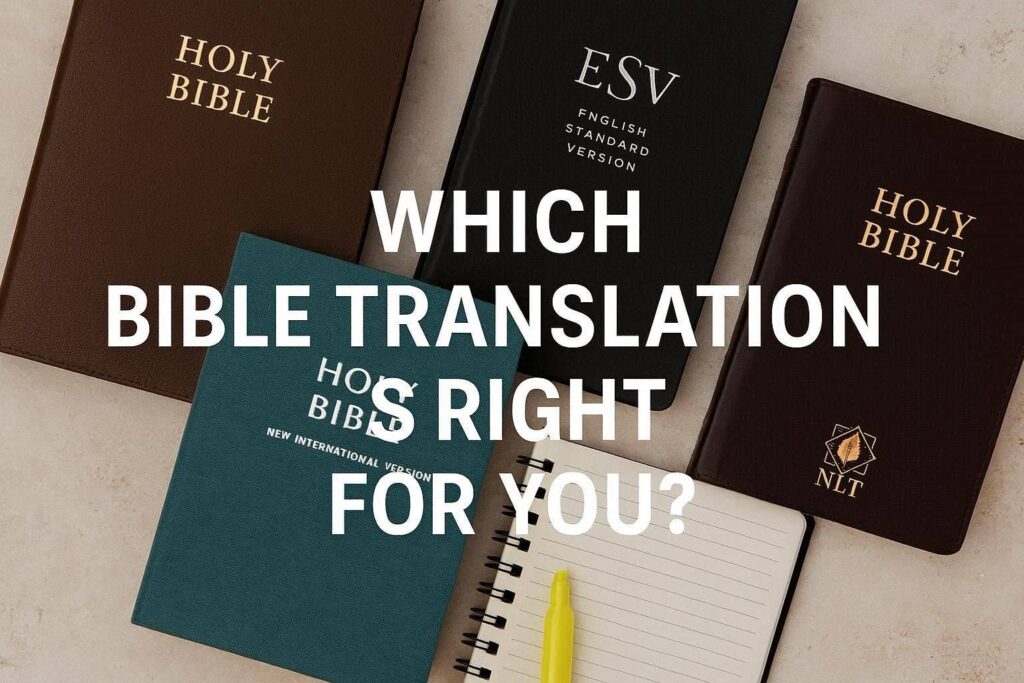
KJV is my go-to because I believe it is the least corrupted of all translations.
Where Should Beginners Start Reading in the Bible?
This is the most important decision you’ll make as a new reader. Here’s the order that works best for most people.
Should I Start with Genesis?
You can, but it’s not the easiest entry point. If you do start there, read through Genesis and then skip ahead rather than trying to push through Leviticus, Numbers, and the detailed law codes right away. Those books matter, but they land better once you understand the bigger story.
Why the Gospel of John Is a Great Starting Point
Most pastors and Bible teachers recommend beginners start in the Gospel of John. It’s written specifically to explain who Jesus is and why it matters, it’s narrative (so it reads like a story), and it’s short enough to finish in a week or two.
From there, a natural beginner’s path looks like this:
- Gospel of John — who Jesus is
- Genesis — where the story starts
- Exodus (first 20 chapters) — the story of deliverance and the Ten Commandments
- Psalms (a few at a time) — prayer, worship, and honest emotion
- Proverbs (a chapter a day) — practical wisdom for daily life
- Acts — how the early church began
- Romans — a clear explanation of core Christian belief
This order builds context before complexity, which is the difference between a beginner who finishes and one who gives up in week three.
What’s a Good Bible Reading Plan for Beginners?
You don’t need a 365-day, read-the-whole-Bible plan right out of the gate. Start smaller and build the habit first.
A simple 30-day beginner plan:
- Days 1–10: Gospel of John (about 2 chapters a day)
- Days 11–17: Genesis 1–25 (the early chapters — creation, Noah, Abraham)
- Days 18–24: Selected Psalms (23, 1, 91, 121, 139, 27, 34)
- Days 25–30: Proverbs 1–6, one chapter a day
This gives you a taste of story, history, worship, and wisdom literature — the four genres you’ll return to most often — without overwhelming you.
How Much Should I Read Each Day?
Less than you think. A single chapter a day — sometimes even half a chapter — is enough to build a real habit. Consistency beats volume every time. Five minutes a day for a month will teach you more than one three-hour session that burns you out.
A simple structure that works well:
- Read one short passage (10–20 verses)
- Ask one question: What does this tell me about God? What does this tell me about people?
- Write one sentence in a notebook or journal about what stood out
That’s it. You’re not trying to become a theologian in week one — you’re trying to build a habit that lasts.
What Tools Help Beginners Understand the Bible?
A few tools make a real difference without adding complexity:
- A study Bible — has short explanatory notes at the bottom of each page for context
- A reading plan app — YouVersion (Bible App) is free and has hundreds of beginner plans with built-in audio
- A basic notebook — for the one-sentence habit above
- A cross-reference or concordance — helpful later, not necessary on day one
Skip commentaries and deep theological resources at first. They’re valuable eventually, but they can bury a beginner in detail before the big picture is even in place.
How Do I Stay Consistent Reading the Bible?
Habit formation matters more than motivation here. A few things that help:
- Anchor it to an existing habit — read right after your morning coffee or right before bed, not “whenever you find time”
- Pick a fixed, short amount — one chapter, not “as much as I feel like”
- Track it visually — a simple checkmark calendar keeps momentum going
- Expect to miss a day — missing one day doesn’t break the habit; missing two in a row is what usually does, so the goal is just getting back on the very next day
If you’re navigating this alongside other life pressures — work stress, self-doubt, or just a packed schedule — it can help to pair your reading with topics that meet you where you are. If anxiety at work is part of what brought you here, Bible Verses for Work Anxiety is a good next read. And if you’re building any kind of personal project alongside your faith — including a blog like this one — How to Start a Christian Blog walks through that from the ground up.
Frequently Asked Questions
Do I have to read the Bible in order, front to back? No. The Bible wasn’t written in chronological or reading order, and very few pastors recommend reading it that way as a beginner. Starting with John, then Genesis, then Psalms and Proverbs, gives you context before complexity.
What’s the easiest book of the Bible to start with? The Gospel of John is the most commonly recommended starting point because it’s narrative, relatively short, and written specifically to explain who Jesus is.
How long does it take to read the whole Bible? Reading straight through takes most people 60–90 minutes a day for a year, or about 15 minutes a day over three years. Beginners don’t need to aim for the whole Bible right away — a 30-day plan focused on a few books is a better starting goal.
Is it okay to not understand parts of the Bible at first? Yes, completely normal. Confusing or difficult passages are common even for experienced readers. Note the question, keep reading, and revisit it later — many things become clearer once you understand more of the surrounding story.
What if I don’t feel anything when I read? That’s normal too, especially at first. Building a reading habit is more like building a muscle than waiting for a feeling — the sense of connection usually grows with consistency, not before it.