Why Many Beginners Struggle With Bible Study
Starting a Bible study journey can feel overwhelming. Many beginners open the Bible with good intentions but quickly become frustrated because they do not know where to begin, which books to read first, or how to understand difficult passages.
The Bible is not just another book; it is a collection of 66 books written across thousands of years by different authors, cultures, and historical settings. Without a proper approach, reading Scripture can feel like trying to understand a conversation halfway through without knowing the background.
Many new believers struggle because they approach Bible reading like they would approach a regular book. They read a chapter, finish a few verses, and expect instant understanding. However, studying Scripture requires patience, prayer, reflection, and a willingness to dig deeper. The goal of Bible study is not simply gaining information but developing a relationship with God, understanding His character, and applying His truth to everyday life.
A good Bible study method acts like a map during a journey. Without a map, you may still move forward, but you might get lost along the way. With the right method, you can discover the meaning behind passages, recognize important themes, and build a stronger foundation of faith.
After more than 20 years studying Christian teachings and helping others understand Scripture, one principle remains consistent: beginners should focus less on reading more and focus more on understanding better. A few verses studied deeply can transform your life more than several chapters read quickly without reflection.
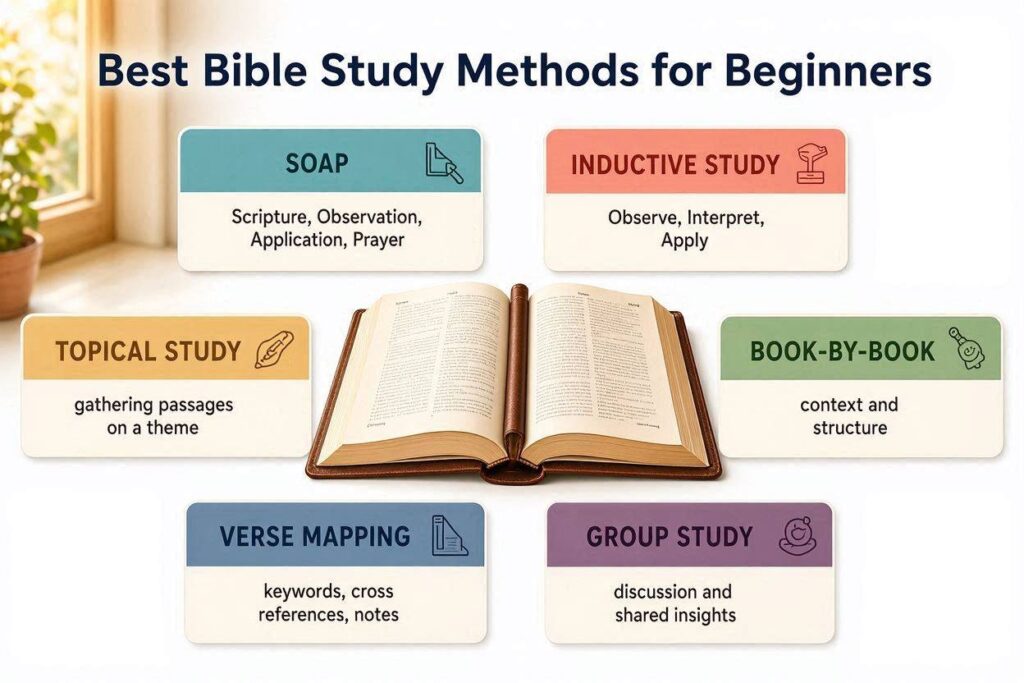
The best Bible study method for beginners is the one that helps you consistently engage with God’s Word. Whether you prefer structured study, personal reflection, or exploring specific topics, there is a method that fits your learning style.

| Bible Study Method | Best For | Difficulty Level | Main Focus |
|---|---|---|---|
| SOAP Method | New believers and daily devotionals | Beginner | Scripture application |
| Inductive Bible Study | Serious learners wanting deeper understanding | Intermediate | Context and meaning |
| Verse Mapping | People who enjoy detailed study | Beginner-Intermediate | Breaking down verses |
| Topical Bible Study | Studying specific life issues | Beginner | Biblical themes |
| Chapter-by-Chapter Study | Building biblical knowledge | Beginner-Intermediate | Understanding books of the Bible |
| Devotional Study | Creating daily spiritual habits | Beginner | Personal growth |
Method 1: The SOAP Bible Study Method
The SOAP Bible study method is one of the most popular approaches for beginners because it is simple, practical, and focused on applying God’s Word. SOAP stands for Scripture, Observation, Application, and Prayer. This method helps readers move beyond simply reading words on a page and encourages personal transformation.
The first step is Scripture. Choose a passage or verse that speaks to you and write it down. Writing Scripture slows your mind down and allows you to focus on each word. Many people discover that verses they have read many times reveal new meaning when they take time to write and reflect on them.
The second step is Observation. Ask questions about what you are reading. What is happening in this passage? Who is speaking? Who is the audience? What does this teach about God, people, faith, obedience, or sin? This step helps you understand the original meaning instead of immediately jumping to personal application.
The third step is Application. This is where Bible study becomes personal. Ask yourself: How does this Scripture apply to my life today? Is there something I need to change? Is God encouraging me, correcting me, or teaching me something important?
The final step is Prayer. Turn what you learned into a conversation with God. Ask Him for wisdom, strength, and guidance to apply what you discovered.
Who It’s Best For
The SOAP method is ideal for:
- New Christians beginning their faith journey
- Busy people who want a simple daily routine
- People who enjoy devotional-style Bible study
- Anyone who wants to connect Scripture with everyday life
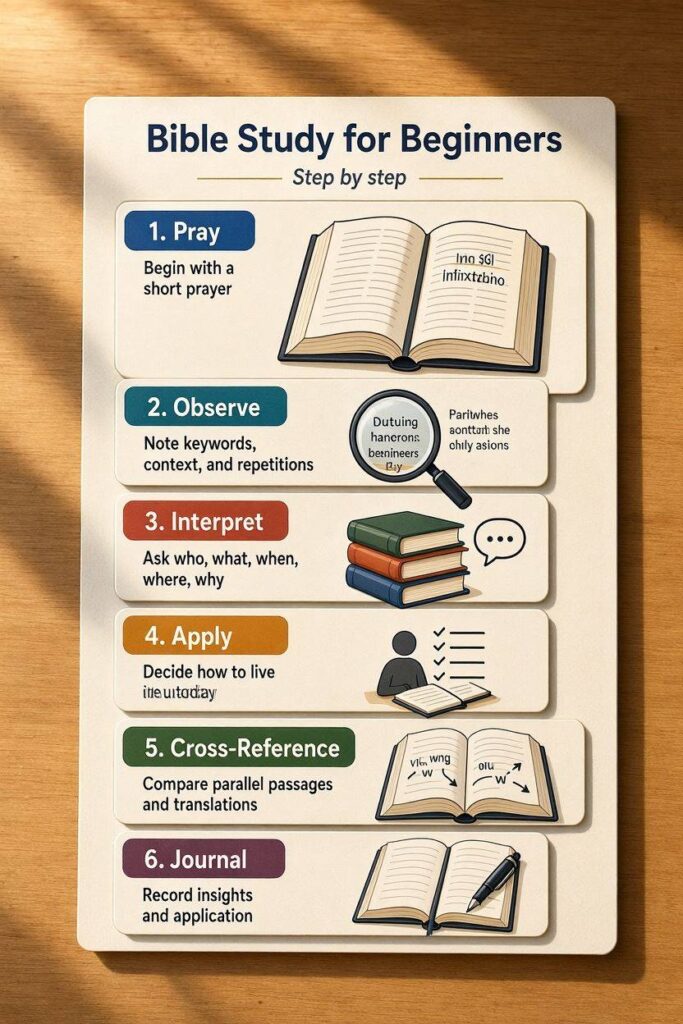
Method 2: The Inductive Bible Study Method
The inductive Bible study method is one of the most effective ways to understand Scripture because it focuses on discovering what the Bible actually says before deciding what it means personally. This approach has been used by pastors, teachers, and serious Bible students because it emphasizes careful study rather than quick conclusions.
The inductive method has three major steps: observation, interpretation, and application.
Observation: What Does the Passage Say?
Observation requires slowing down and paying attention to details. Instead of quickly reading a passage, you examine words, repeated themes, commands, promises, and important events.
For example, when studying a passage about faith, you might look for:
- Who demonstrated faith?
- What challenges did they face?
- How did God respond?
- What promises were given?
This approach helps prevent misunderstandings because it focuses on the actual text.
Interpretation: What Does the Passage Mean?
Interpretation involves understanding the historical and cultural context. The Bible was written for us, but it was not originally written directly to modern society. Understanding the original audience helps reveal the intended message.
Questions to ask include:
- Who wrote this passage?
- When was it written?
- What was happening historically?
- How does this passage connect with the rest of Scripture?
Application: How Should This Change My Life?
The final step asks how God’s Word should influence your thoughts, decisions, and actions. True Bible study should lead to transformation.
Who It’s Best For
The inductive method is best for:
- Christians wanting deeper biblical knowledge
- Small group Bible studies
- Future teachers or ministry leaders
- People who enjoy research and detailed learning
Method 3: The Verse Mapping Method
Verse mapping is a popular Bible study approach that focuses deeply on individual verses. Instead of reading large sections quickly, you choose one verse and explore its meaning, background, and practical application.
A verse map typically includes:
- The original verse
- Key words and definitions
- Cross references
- Historical background
- Personal application
For example, when studying Philippians 4:13, “I can do all things through Christ which strengtheneth me,” a beginner might explore what “strengtheneth” means, examine the surrounding verses, and study other passages about God’s strength.
Verse mapping helps beginners discover that every word in Scripture has meaning. It turns Bible study into an exploration rather than a simple reading exercise.
Who It’s Best For
Verse mapping works well for:
- Visual learners
- People who enjoy journaling
- Beginners who want to study slowly
- Christians looking for deeper understanding
Method 4: The Topical Bible Study Method
A topical Bible study focuses on a specific subject found throughout Scripture. Instead of studying one book of the Bible, you explore what the entire Bible teaches about a particular topic.
Common topics include:
- Faith
- Prayer
- Forgiveness
- Marriage
- Anxiety
- Money
- Leadership
- Wisdom
For example, someone struggling with worry might study every major passage about trusting God. They could examine verses from Psalms, Proverbs, the Gospels, and Paul’s letters to understand the biblical perspective on anxiety.
The advantage of topical study is that it helps believers understand God’s complete message about important areas of life.
However, beginners should be careful not to take verses out of context. Every passage should be studied according to its original meaning.
Who It’s Best For
Topical studies are ideal for:
- People seeking answers about specific life challenges
- Small groups
- New believers with practical questions
- Christians wanting to explore biblical themes
Method 5: The Chapter-by-Chapter Bible Study Method
The chapter-by-chapter method involves studying an entire book of the Bible one section at a time. This method helps beginners understand the bigger story of Scripture.
Many beginners start with books such as:
- John
- Philippians
- James
- Proverbs
- Psalms
Studying chapter by chapter allows you to understand the author’s message, the historical setting, and how individual passages connect together.
For example, studying the Gospel of John chapter by chapter reveals Jesus’ identity, miracles, teachings, death, and resurrection in a structured way.
This method prevents random Bible reading and helps develop a complete understanding of biblical books.
Who It’s Best For
This method is best for:
- Beginners wanting structure
- People who want to understand entire Bible books
- Long-term Bible study plans

Method 6: The Devotional Bible Study Method
The devotional method focuses on personal spiritual growth. It combines Scripture reading with prayer, reflection, and worship.
A devotional Bible study usually includes:
- Reading a short passage
- Reflecting on the message
- Writing personal thoughts
- Praying about what was learned
This method is powerful because it encourages consistency. A person who spends 15 minutes daily studying Scripture can experience significant spiritual growth over time.
The goal is not completing large amounts of Scripture but allowing God’s Word to shape your heart.
Who It’s Best For
The devotional method is best for:
- Busy schedules
- New believers
- Morning quiet times
- Personal spiritual growth
Essential Bible Study Tools for Beginners
Having the right tools can make Bible study easier and more meaningful.
Useful resources include:
- A reliable Bible translation
- A study Bible with notes and explanations
- Bible dictionaries
- Concordances
- Journals
- Highlighters
- Bible study apps
Popular beginner-friendly study Bibles include:
- Life Application Study Bible
- ESV Study Bible
- NIV Study Bible
The most important tool, however, is a willing heart. Resources can provide information, but spiritual growth comes through prayer, reflection, and obedience.
How to Create a Consistent Bible Study Habit
Many beginners fail because they start with unrealistic goals. Reading five chapters every day may work temporarily, but consistency matters more than intensity.
Start small.
A simple beginner routine:
- Choose a specific time each day.
- Pick one Bible book to study.
- Use one consistent method.
- Keep notes.
- Pray before studying.
Think of Bible study like building a relationship. Strong relationships grow through regular communication, not occasional conversations.

Common Mistakes Beginners Should Avoid
One common mistake is trying to understand everything immediately. Some biblical concepts require time and maturity.
Another mistake is studying without context. A verse removed from its surrounding passage can easily be misunderstood.
Beginners should also avoid comparing their Bible journey with others. Some people may read through the Bible quickly, while others spend months studying one book. Growth looks different for everyone.
The goal is not competition. The goal is knowing God more deeply.
Frequently Asked Questions About Bible Study Methods
What is the easiest Bible study method for beginners?
The SOAP method is usually the easiest starting point because it provides a simple structure while helping readers apply Scripture personally.
How long should a beginner study the Bible each day?
A beginner can start with 15 to 20 minutes daily. Consistency is more important than the amount of time spent.
What book of the Bible should beginners study first?
Many beginners start with the Gospel of John because it clearly explains who Jesus is and why faith in Him matters.
Should beginners use a study Bible?
Yes. A study Bible can provide helpful historical background, explanations, and cross references that make difficult passages easier to understand.
How can I stay motivated during Bible study?
Create a regular routine, pray for understanding, choose a method you enjoy, and remember that Bible study is about relationship with God rather than simply gaining knowledge.
Finding the Bible Study Method That Helps You Grow
The best Bible study method for beginners is the one that helps you consistently engage with God’s Word and apply it to your life. Whether you choose SOAP, inductive study, verse mapping, topical study, chapter-by-chapter reading, or devotional study, each method provides a pathway toward deeper understanding.
Bible study is not about rushing through pages or checking off a religious responsibility. It is about discovering God’s truth, growing spiritually, and allowing Scripture to shape your decisions, attitudes, and relationships.
Start with a simple method. Be patient with yourself. Ask questions. Pray for wisdom. Over time, Bible study will become more than a habit—it will become a source of guidance, encouragement, and spiritual strength.